
The Human Edge in an AI World
Which skills can artificial intelligence not replace, and how do you build a career around them? As AI automates routine tasks across every sector, the professionals with the greatest long-term security won't be those who know the most tools. They'll be those who have developed the capabilities that remain distinctly human: curiosity, creativity, empathy, ethical judgment, and the ability to connect, inspire, and lead. Career coach Elizabeth Lenihan explains how to identify your own human edge and use it as the foundation for a future-fit career.
Why curiosity, courage, and connection matter more now than ever.
When the ground shifts, it's natural to pause and wonder what's next. Many professionals are asking just that, especially as AI integration accelerates across industries.
"Will my skills still hold value?" "Am I being left behind?" These are not just career questions; they’re human anxieties. They spring from uncertainty and concern, but also from a desire to grow and stay relevant.
AI may reshape the landscape, but it hasn't, and never will, rewrite the rules of being human.
The skills that will carry us forward aren't merely technical. They are personal. They are the human capacities that empower you to adapt, to connect authentically, and to lead with purpose.
A Period of Transition
The numbers tell the story. Microsoft and LinkedIn’s 2024 Work Trend Index shows that over 75% of knowledge workers are now using AI tools daily.
Roles are evolving. Job descriptions are shifting. Entire professions are being reimagined.
But behind every line of code and algorithm, something remains unchanged: our imagination, our intuition, and our ability to care.
AI can automate. It can support. But it still requires your prompts, your insight, and your vision. It is a tool—one that helps you go further, not one that defines where you’re going.
What Sets You Apart?
It won’t be your job title. It won’t be how quickly you learn the newest tool. It will be this:
Your ability to adapt—with intention, skill, and a clear sense of purpose.
This isn’t a personality trait—it’s a mindset. A muscle you build with each challenge you navigate. In psychology, it’s called self-efficacy: the inner belief that you can handle what’s ahead. Strengthening that belief makes you more resilient, resourceful, and ready for anything.
Adaptability is not about “going with the flow.” Flexibility reacts. Adaptability steers. It involves mapping a plan, choosing how to respond, and leading your own evolution.
As James Clear writes in Atomic Habits: “Every action you take is a vote for the type of person you wish to become.”
Build Your Adaptability Muscle
One simple way to strengthen your adaptability is through reflection. Think back to a time when change was out of your control—a new leader, a project pivot, a restructuring, or even a personal challenge.
Ask yourself:
What was your first response?
How did you ultimately adapt?
What helped you—or what held you back?
What would you do differently now?
How did it shape who you are today?
These reflections help you track your growth and strengthen your trust in yourself.
Traits That Will Help You Thrive
The professionals who will thrive in this transition share five key strengths:
Growth Mindset - Coined by Dr. Carol Dweck, this is the belief that you can improve with effort and feedback. Instead of “I can’t,” it asks, “What can I learn next?”
Self-Awareness - Pay attention to your patterns—what triggers stress or avoidance. Growth begins with non-judgmental awareness and is the first step to consciously changing them and expanding your comfort zone.
Grit - Popularised by Angela Duckworth, grit is passion + perseverance. It keeps you going when things get hard or progress feels slow. It’s the consistent daily effort toward your long-term goals.
Intentionality - Be clear on your values, and let them guide your choices. When things feel uncertain, your values are your internal compass.
Tolerance for Uncertainty - Growth happens in ambiguity. Learn to stay grounded even when you don’t have all the answers.
Where to Focus as AI Grows
AI will continue to absorb more repetitive or routine elements of your role. That creates a powerful opportunity: the chance to focus on work only you can do.
Here's where your energy, focus, and passion are worth doubling down:
Curiosity – The Drive to Discover - AI works with what already exists. Your curiosity creates what doesn’t. Ask questions. Explore ideas. Follow your 'what ifs'. Curiosity ignites innovation and solutions.
Courage – Taking Action in Uncertainty - It takes guts to keep showing up. Courage is not the absence of fear—it’s acting in spite of it. The American Psychological Association consistently links courageous behaviour with sustained success and satisfaction, even in unfamiliar or rapidly changing environments. It's the quiet strength that propels you forward.
Creativity – Your Unique Human Signature - Think of AI as your assistant, let it manage the mundane. The World Economic Forum continuously ranks creativity among the top three skills for the future workforce, for good reason. It’s your unique imprint, your ability to connect disparate ideas and forge something entirely new.
Communication – The Backbone of Connection - Yes, AI can draft an email. But only you can build trust, resolve conflict, and communicate in a way that moves people. Learning how others communicate, listen, absorb, and process information is a superpower. Communication isn’t just a skill—it’s the master key to influence, leadership, and collaboration.
Compassion – The Core of Our Humanity - AI can process data. But only you can make an ethical choice. Only you can respond to a person with empathy, presence, and care. In an age of automation, compassion is your ultimate differentiator.
Our Work Will Evolve
AI will change how we work. But it won’t replace what we bring.
Your job title may stay the same, but the tasks will shift. And that shift is an invitation: to step into more impactful, human-centered contributions.
Ask yourself:
What parts of my work could AI support?
What parts require my unique judgment, intuition, and empathy?
How can I sharpen those human skills to increase my impact?
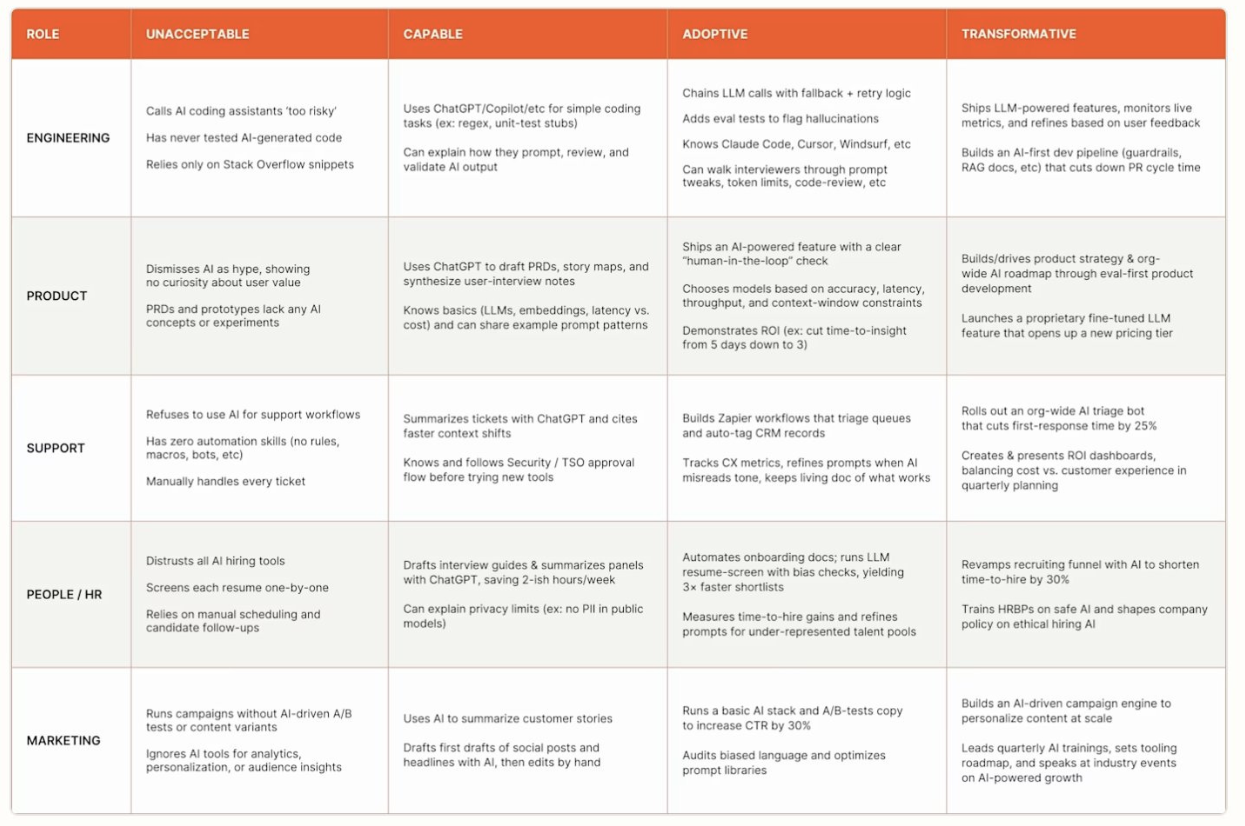
Example of Zapier AI Literacy Interview Framework, the engagement and literacy sought from an AI-first company.
AI is like a mixer in the hands of a chef—it speeds up the prep, but the craft? That’s still yours.
Ready to Take the Next Step?
When the future feels unclear, it’s tempting to wait. But meaningful change doesn’t wait for permission—it starts when you take one small, focused step forward.
You don’t need a five-year plan. You need clarity. Curiosity. And the willingness to grow into what’s next.
Because the most powerful tool you’ll ever possess in your evolving career… is you.
Start Here:
Step 1: Get Clear on What Drives You
Use the Career Guide Workbook: Navigating Your Career with the MAPS Compass to clarify your values, motivations, and direction.
Step 2: Identify Your Human Edge
Explore emerging roles that align with your unique skills and values.
Use the free Human-Centered Career Paths Worksheet, a guide to help you discover and grow your human + AI edge.
You’re not starting from scratch. And you’re not on your own.
Read next: AI Shift in Workforce Dynamics
Elizabeth Lenihan is an award-winning Career Strategist and Talent Consultant with nearly 20 years of experience helping professionals across Ireland, the UK, the US, and Canada navigate interviews, career transitions, and professional growth. She is the author of The Ultimate Interview Guide, The Resume Writing Guide, The Performance Review Playbook, and Navigating Your Career with the MAPS Compass — available at elizabethlenihan.com/store and on Amazon. For 1-1 career coaching, contact hello@elizabethlenihan.com.
