
Burnout isn't a badge of honour. It's a warning sign. It's something I've lived through, learned from, and now carry as part of who I am. I know what it feels like to give everything to your work until there's nothing left for yourself. And I know what it takes to rebuild.
The Breaking Point
For years, my career was everything. My purpose. My identity. I worked 10–12-hour days on average, sometimes 18 or more when international deadlines demanded it. Financial security has always been a driver for me. Recognition and promotions were my fuel. Burning the candle at both ends felt normal. I was exhausted, but I didn't recognise it or question it. I didn't even notice that every time I slowed down, I’d get sick.
Then the cracks began to show.
Just as Covid turned the world upside down, my company shut down the product we had been building, and suddenly my team, my work family, faced redundancy. Having to lead my colleagues through that process, as well as myself, and watching people I deeply cared about lose their roles, was heartbreaking. I was one of the lucky few to find an internal role, but nothing about it felt lucky. The stress from the redundancy process, combined with the uncertainty of the pandemic, weighed heavily.
Not long after, my dad was diagnosed with cancer. Three months later, he was gone.
I threw myself into my new role. Programmes were scaling, impact was being made, and I even won an EU award. But behind the scenes, I was struggling. A new manager and I weren't aligned. I felt like an inherited problem, never quite trusted, never quite belonging. Projects were stalled or dismissed. It chipped away at my confidence.
And then came a health scare that stopped everything.
I found a lump. What followed was weeks of tests, scans, biopsies, and waiting, the specific kind of waiting that makes everything else feel very small. The lump was a cyst. But the mammograms found something else. More biopsies. Surgery. A DCIS diagnosis.
I know how fortunate I am compared to the many women I saw in those waiting rooms. But that didn't erase the fear, carried on top of grief, and a career that felt like it was slipping through my fingers.
That's when I broke.
My anxiety spiralled. Panic attacks hit me multiple times a day. I couldn't watch TV. I couldn't listen to music. I couldn't face people. I just needed the world to stop.
My body finally said: enough.
The Slow Rebuild
Burnout doesn't happen overnight. It builds slowly, often disguised as dedication or drive. I could have ticked the warning signs for years before I admitted it: persistent exhaustion, growing cynicism, a creeping sense that nothing I did was ever quite enough. Left unchecked, it takes everything.
I turned to my doctor, started therapy, and trialled medication until I found what worked. And while I was on sick leave, the voluntary redundancy email arrived. Everything I'd been carrying suddenly made sense. I knew that one way or another, my position wasn't going to survive, and that realisation arrived at the moment I had the least capacity to absorb it.
My therapist helped me get honest about what I actually needed, and whether work, in its current form, could give me any of it. I knew I was in no state to return. I needed to prioritise my health and my recovery. I couldn't keep pushing. I couldn't keep burning myself down to prove my worth.
So, I let go.
I took redundancy. It broke my heart. But it was the right decision.
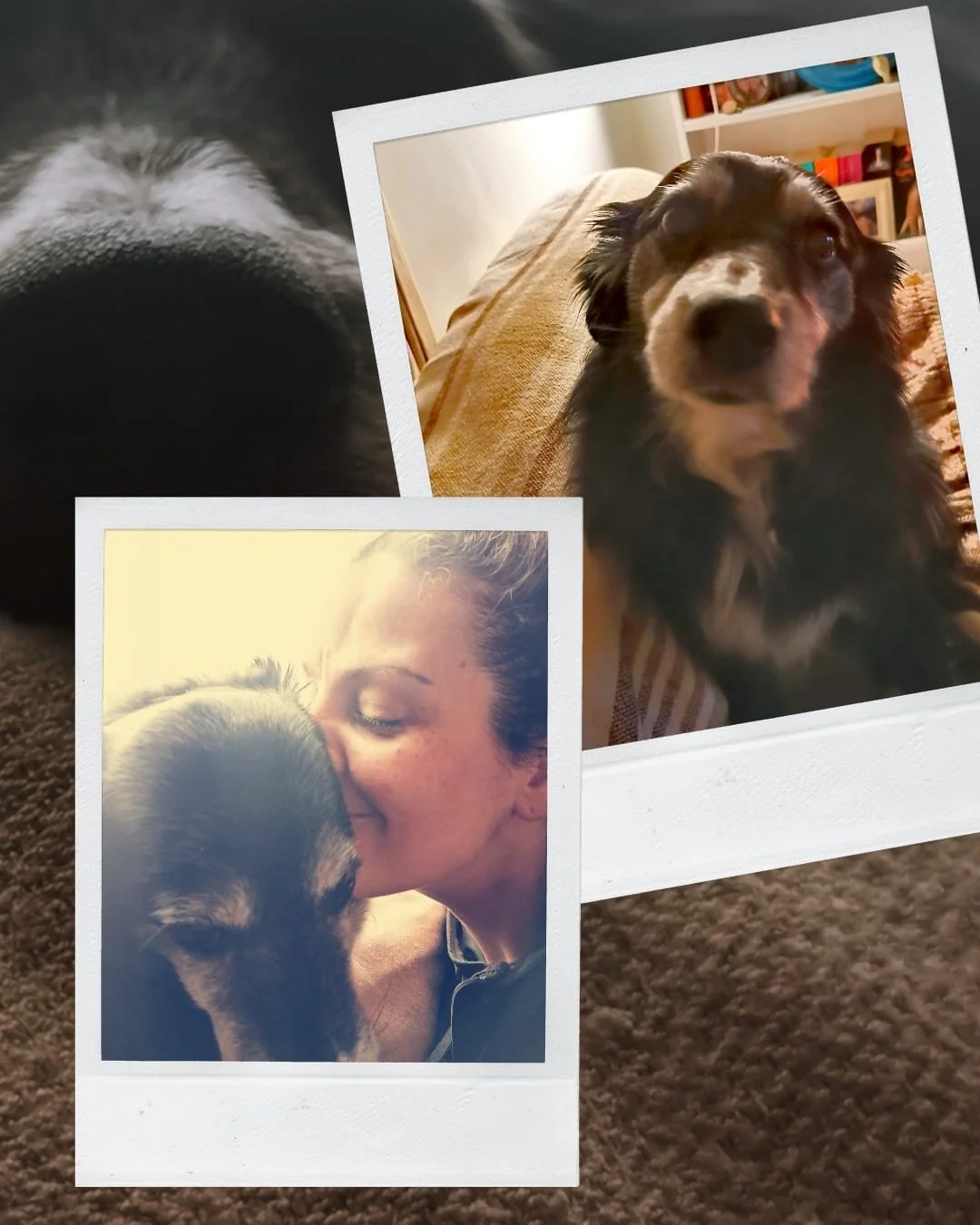
And then my brother and sister-in-law gave me the greatest gift of their dog, Caesar. He forced me outside, three walks a day. He gave me unconditional love at a time when I couldn't accept it from anyone else. He was the light that pulled me through the darkest days.
In those walks, I started to breathe again.
What I Carry Now
I didn't come back the same person. I came back clearer. About what I wanted, what I was willing to trade, and, perhaps most importantly, what I wasn't.
When I work with clients today, my guidance doesn't come only from nearly two decades of career experience. It comes from a lived understanding of what happens when ambition, purpose, and pressure collide. I understand how burnout hides behind achievement, how purpose can turn into pressure, and how easy it is to lose yourself in the pursuit of "enough."
My role now is to help people find clarity, confidence, and balance, to see alternatives they may never have realised were possible, and to redefine success on their own terms.
The cost of burning out was high. But finding my way back gave me something I couldn't have built any other way: clarity, compassion, and a purpose I actually believe in. I help people find that, without having to go through what I did to get there.
You don't have to choose between being great at your career and being present in your life. But you do have to decide what success actually means to you, before someone else's version of it decides for you.
If this resonated, these posts continue the conversation:→ Balance Without Burnout→ Creating Healthy Boundaries at Work→ Finding Motivation When Confidence Wavers
Sources ¹ World Health Organization (WHO), "Burn-out an occupational phenomenon," 2023 update.
Elizabeth Lenihan is an award-winning Career Strategist and Talent Consultant with nearly 20 years of experience helping professionals across Ireland, the UK, the US, and Canada navigate career transitions, interviews, and professional growth. Winner of the 2022 EU Woman4IT Ambassador Award. She is the author of The Ultimate Interview Guide, The Resume Writing Guide, The Performance Review Playbook, and Navigating Your Career with the MAPS Compass — all available at elizabethlenihan.com/store and on Amazon, free with Kindle Unlimited. For 1-1 career coaching, contact hello@elizabethlenihan.com.
